Strangest लेबलों वाले संदेश दिखाए जा रहे हैं. सभी संदेश दिखाएं

10 Strangest Defense Mechanisms In Nature


We are all aware of the fight or flight principle in biology, where an animal responds to a threat by facing the enemy or fleeing from it. There are some fascinating ways that nature deals with these threats. This list will show the ten animals (plus a bonus entry) with the weirdest defense mechanisms.
10
Flying Fish
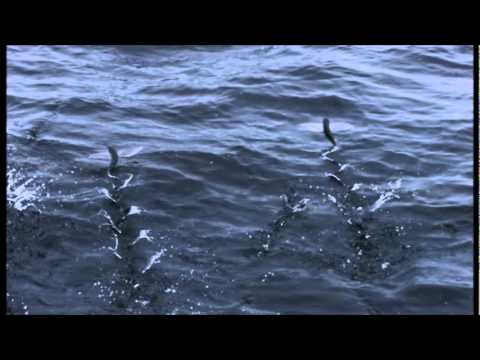
There are many creatures with the power of flight but this feature is generally not attributed to fish. Flying fish are able to jump out of the water and fly or glide for long distances. This is used as a defense mechanism to escape from predators.
The flying fish has a streamlined, torpedo-shaped body which helps it gain enough energy to break through the surface of the water. To get out of the water, the fish swims at speeds of up to 37 miles (60 km) per hour. The fish’s pectoral fins have evolved into large wings which allows the fish to become airborne. Once it is out of the water, it can fly for up to 656 feet (200 meters), using its tail fin as a sort of propeller. In 2008 in Japan, a flying fish was observed gliding for a record 45 seconds.

RP FLIP, the Strangest Ship in the World


The U.S. Office of Naval Research owns a very strange piece of oceanographic equipment. It’s called the FLoating Instrument Platform (FLIP), conceived and developed by the Marine Physical Laboratory (MPL) at the Scripps Institution of Oceanography, University of California. FLIP isn't a ship, even though researchers live and work on it for weeks at a time while they conduct scientific studies in the open ocean. It is actually a huge specialized buoy. The most unusual thing about this ship is it really flips.
FLIP is 355 feet (108 meters) long with small quarters at the front and a long hollow ballast at the end. When the tanks are filled with air, FLIP floats in its horizontal position. But when they are filled with seawater the lower 300 feet of FLIP sinks under the water and the lighter end rises. When flipped, most of the buoyancy for the platform is provided by water at depths below the influence of surface waves, hence FLIP is a stable platform mostly immune to wave action. At the end of a mission, compressed air is pumped into the ballast tanks in the flooded section and the vessel returns to its horizontal position so it can be towed to a new location.
flip-ship-4

Top 10 Strange and Unique Forests


Forests cover approximately 9.4% of the Earth’s surface. However, they once covered over 50%. Most people identify forests with trees, but the concept of the forest ecosystem reaches much further and includes many species, such as smaller plants, fungi, bacteria, insects, animals, as well as energy flow and nutrient cycling. Luckily, a large percentage of people on Earth are still able to enjoy the tranquility of an ancient forest. However, some people have never had the chance to enter one of these majestic plant communities. In fact, almost 80% of Europe’s forests are owned by Russia.
As you step foot into an old growth forest, the rush of fresh air fills your lungs. Your senses perk up and you become aware of the life that surrounds you. In the forest, you never know what is waiting around the corner. In the forest, you will discover and witness new things for the first time. In the forest, you will come to peace with nature. In the forest, you will escape the world of technology and learn what it was like to live off the land. This article will examine ten strange and unique forests.
10
North Sentinel Island Forest
Northsentinel Island Iss006-E-33376 Sat
North Sentinel Island is one of the Andaman Islands in the Bay of Bengal. It lies to the west of the southern part of South Andaman Island. North Sentinel Island is unique because it is surrounded by coral reefs and lacks natural harbors. For this reason, the area was never settled by Europeans and deforested. The island is almost completely covered in old growth trees and is 72 km² (27.8 sq mi). Due to the isolation, North Sentinel Island has become home to the last pre-Neolithic tribe known as the Sentinelese.
The Sentinelese tribe consists of 50 to 400 individuals. The group strongly rejects any contact with the outside world. On January 26, 2006, two men were illegally fishing for mud crabs near North Sentinel Island when they were attacked and killed by Sentinelese. The Indian coastguard attempted to recover the bodies using a helicopter, but they were met by a hail of arrows. It was reported that the fisherman’s bodies were buried in shallow graves and not roasted and eaten. However, the idea that the tribe would eat the men is very real.
During the 2004 Indian Ocean earthquake and tsunami, North Sentinel Island was greatly damaged. The tsunami sank some of the surrounding coral reefs and raised others. The coastline of the island was completely demolished. The Sentinelese fishing grounds were disturbed, but the tribe has since adapted to the current conditions. The Sentinelese maintain an essentially hunter-gatherer society, obtaining their subsistence from the forest through hunting, fishing, and collecting wild plants.
Their agricultural practices and methods for producing fire are currently unknown. The Sentinelese weaponry consists of javelins and a flatbow, which has an extremely high accuracy against human-sized targets up to nearly 10 meters (32.8 feet). The Sentinelese has even been known to use untipped arrows for warning shots. There food consists primarily of plantstuffs gathered in the forest, coconuts which are frequently found on the beaches, pigs, and presumably other wildlife (which apart from sea turtles is limited to some smaller birds and invertebrates).
Selected Quote: “I believe our biggest issue is the same issue the whole world is facing, and that’s habitat destruction.” Steve Irwin.
10 of the World's Strangest Plant Species

Welwitschia mirabilis:World's Most Resistant Plant
It's not pretty to look at, but Namibia's plant Welwitschia Mirabilis can truly claim to be one of a kind. There really is nothing like it. Welwitschia plant consists of only two leaves and a sturdy stem with roots. That's all! Two leaves continue to grow until they resemble the shaggy mane of some sci-fi alien. The stem thickens, rather than gains in height, and can grow to be almost 2 meters high and 8 meters wide. Their estimated lifespan is 400 to 1500 years. It can survive up to five years with no rain. The plant is said to be very tasty either raw or baked in hot ashes, and this is how it got its other name, Onyanga, which means onion of the desert. (Link | Photo 1 | Photo 2)

Dionaea muscipula: the Venus Fly Trap
The Venus Fly Trap is the most famous of all carnivorous plants due to the active and efficient nature of its unique traps. It may be famous, but it's also threatened. The plant's two hinged leaves are covered in ultra sensitive fine hairs that detect the presence of everything from ants to arachnids. Triggerthe hairs and snap! The trap will shut in less than a second. (Link | Photo)

Rafflesia arnoldii: World's Largest Flower
There is one exotic and rare plant you wouldn't likely want to grow anywhere near your landscape no matter how famous it would make you for doing so. That would be growing the largest flower in the world. This exotic, very rare, speckled, though not particularly pretty, rust colored flower is called Rafflesia Arnoldii.

Rafflesia Arnoldii, recently assigned to the Euphorbiaceae family, is the biggest individually produced flower in the world. It gets to be 3 feet across and weighing a whopping 15- 24 pounds. That's pretty darn big but still you would not like this flower in your perennial bed. Why is that? If you could mimic a rainforest type environment for this plant, it gives off a mostoffensive odor when in bloom. This scent is somewhat like rotting meat. This is why it is often called the Corpse Plant by some natives of Indonesia where it originates.

Its blossoms only last three days to a week. But in those few days it needs a miracle or two just for survival. This hideous smell it produces attracts pollinating insects to it to help perpetuate the species. But even when this happens only 10-20 percent of the tiny seedlings make it. With any luck in nine months it blooms. (Link | Photo)

Desmodium gyrans: the Dancing Plant
Darwin called the plant Hedysarum; modern botanists call it either Desmodium Gyrans, or more correctly these days, Codariocalyx Motorius. Its common name is Dancing Grass or Telegraph Plant or Semaphore Plant -- after the leaf movements, which resemble semaphore signals. For all of its uses this plant is easy to grow, dancing happily on a sunny windowsill and watered when dry. Some say it dances best to the "Greatful Dead!" (Link)

Euphorbia obesa: the Baseball Plant
Euphorbia Obesa, also known as the Baseball Plant, is endemic to the Great Karoo region of South Africa. Unsustainable harvesting by plant collectors who value Euphorbia obesa for its interesting and curious appearance has severely impacted wild populations. Consequently, national and international legislation have been enacted to protect remaining populations. While Euphorbia obesa remains endangered in its native habitat, it has become very common in cultivation. By growing large numbers of Euphorbia obesa, nurseries and botanical gardens have been working to ensure that specimens being traded and sold among plant collectors are not obtained from the wild. (Link)

Amorphophallus titanum: the Corpse Flower
A flower taller than a man, stinking strongly of putrefying roadkill and colored deep burgundy to mimic rotting flesh, sounds like something from a low-budget science fiction movie. But Indonesia's titan arum—or "corpse flower," as known by locals—is a real, if rare, phenomenon, pollinated in the wild by carrion-seeking insects. This Indonesian plant, called titan arum or amorphophallus titanium, has the world's biggest inflorescence. Due to its fragrance, which is reminiscent of the smell of a decomposing mammal, the Titan Arum is also known as a carrion flower, the "Corpse flower", or "Corpse plant". (Link 1 | Link 2)

Baobab: the Bottle Tree
Baobab is the common name of a genus (Adansonia) containing eight species of trees, native to Madagascar, mainland Africa and Australia. Also known as the Bottle Tree, not only do they look like bottles, but the trees typically store around 300 liters of water! No wonder why they often live over 500 years! (Link)

Dracaena cinnabari: the Dragon Blood Tree
Dracaena Cinnabari is a Dragon Tree native to the Socotra archipelago. It is also referred to as the Dragon Blood Tree and Socotra Dragon Tree. It is one of the most striking of Socotra's plants, a strange-looking, umbrella-shaped tree. It was first formally described by Isaac Bayley Balfour in 1882. Aminiature Icon of this tree is in Windows as Network-Icon. Its red sap was the dragon's blood of the ancients, sought after as a medicine and a dye.(Link 1 | Link 2)

Mimosa púdica: the Shy Plant
Mimosa Pudica (pudica = shy), or the Sensitive Plant, has a curiosity value: the compound leaves fold inward and droop when touched or shaken, re-opening within minutes. The species is native to South America and Central America, but is now a pantropical weed. Who would know that plants have feelings too? (Link)

Selaginella lepidophylla: the Resurrection Plant
Also known as Rose of Jericho, the Selaginella Lepidophylla is a species of desert plant noted for its ability to survive almost complete desiccation; during dry weather in its native habitat, its stems curl into a tight ball and uncurl when exposed to moisture. It is native to the Chihuahuan Desert.(Link | Photo)
source

123