Largest लेबलों वाले संदेश दिखाए जा रहे हैं. सभी संदेश दिखाएं

Largest Cave in the World Discovered in Vietnam


Largest Cave in the World Discovered in Vietnam


 The world’s largest cave passage was discovered deep within a remote Vietnamese jungle. The Son Doong cave measures 262 feet by 262 feet (80 meters by 80 meters) and at least 2.8 miles (4.5 kilometers) deep, making it the largest single cave passage ever discovered, according to National Geographic News, where the discovery was announced. The previous record holder, Deer Cave in Malaysia, is 300 feet by 300 feet (91 m by 91 m) in parts, but is only about a mile (1.6 km) long.
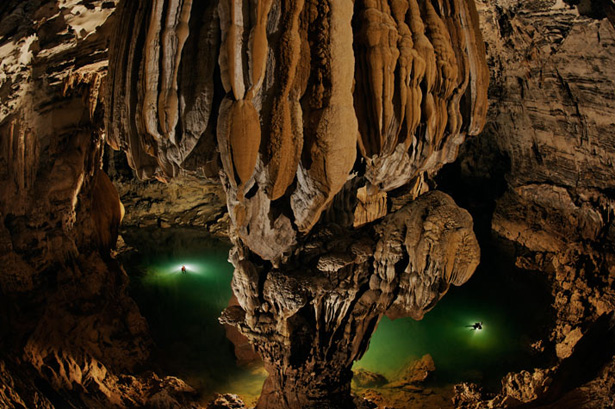
Son Doong01 The Largest Cave in the World Discovered in Vietnam

Largest Shoping Malls in the World

Largest Shoping Malls in the World.


10 Siam Paragon (3.22 million sq ft)
Large shopping malls provide a one-stop shopping for anything imaginable. Our list of largest malls in the world is based on the amount of “Gross Leasable Area”.
This is the number of squar feet the property has for revenue-generating activities like retail, dining and amusements. The building boom in Asia, where land is cheap and labor costs are low has produced the largest shopping malls. Only two shopping malls on this list are located outside Asia.

Largest Swamp in the World


The Sudd is a vast expanse of swampy lowland region in central South Sudan, formed by the river White Nile. The area which the swamp covers is one of the world's largest wetlands in the Nile basin. Its size is highly variable, averaging over 30,000 square kilometers, but during the rainy season depending on the inflowing waters, the Sudd can extend to over 130,000 square km or an area the size of England.

Largest Stadiums in the World

Rungrado May Day Stadium


The Rungrado May First Stadium, or May Day Stadium, is a multi-purpose stadium in Pyongyang, North Korea, completed on May 1, 1989. The stadium can seat 150,000, which is the largest stadium capacity in the world and the world's 12th largest sporting venue. While the stadium is used for sporting events, it is most famous as the site of massive performances and shows celebrating Kim Il-sung and the North Korean nation. In June–July 2002 it was the site of the colossal and meticulously choreographed "Arirang" gymnastic and artistic performance (often referred to elsewhere as "mass games").

10 Largest Natural Arches in the World


A natural arch is a geological formation where rocky cliffs subject to erosion from the sea, rivers or weathering forms a rock arch. Some natural arch has a stream of water flowing underneath, in which case the arch is called a natural bridge. The distinction between a bridge and arch is somewhat arbitrary. The Natural Arch and Bridge Society identifies a bridge as a subtype of arch that is primarily water-formed. By contrast, the Dictionary of Geological Terms defines a natural bridge as a "natural arch that spans a valley of erosion." The correct method to measure an arch is also debated because of which the reported measurements often varies from source to source. Under these circumstances to prepare an irrefutable list of the world’s largest or longest or highest natural arch is impossible. Amidst this confusion new discoveries and potential candidates always keep popping up around the globe.
Natural arches are abundant in the deserts of Utah and Arizona in the United States. The Arches National Park in eastern Utah contains the largest concentration of significant natural arches in the world. As many as 2000 natural sandstone arches, including the world-famous Delicate Arch, in addition to a variety of unique geological resources and formations are found in this region.
The following is a list of 10 biggest natural arches from around the world according to the Natural Arch and Bridge Society.
natural-arches

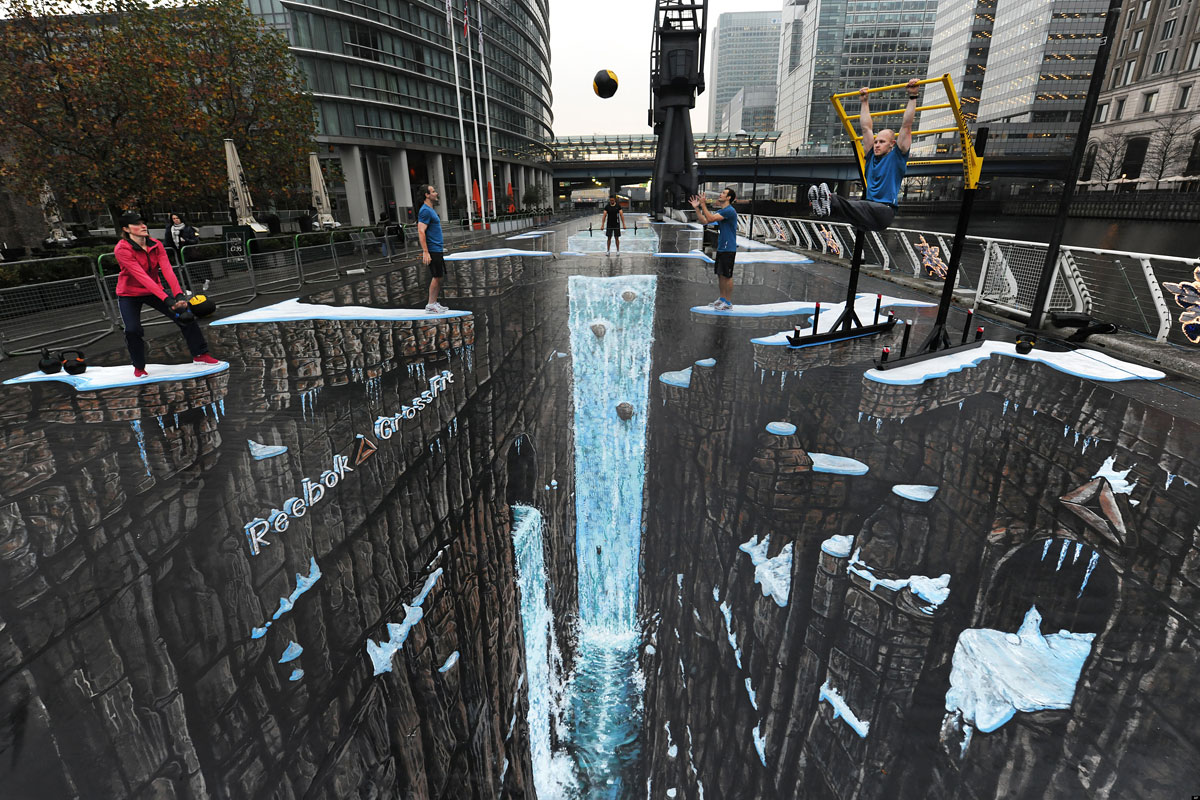
World’s Largest 3D Street Painting

British artist Joe Hill created the world’s largest and longest 3D anamorphic street painting in the Canary Wharf district of London back in November of 2011. The 12,490 square foot painting was sponsored by Reebok CrossFit and it took seven days to create it.


Largest Stadiums in the World

A stadium is a place or venue for outdoor sports, concerts, or other events and consists of a field or stage either partly or completely surrounded by a structure designed to allow spectators to stand or sit and view the event. The size of the stadium does not only depend on the area it covers but also the number of spectators it can accommodate. So, here we have collected the top 12 largest stadium in the world. Take a look...  

1. Rungrado May Day Stadium


12 Largest Stadiums Of The World


A modern stadium is a place or venue for (mostly) outdoor sports, concerts, or other events and consists of a field or stage either partly or completely surrounded by a structure designed to allow spectators to stand or sit and view the event. Here is a list of, non-race, notable sports stadiums, ordered by their capacity, that is the maximum number of spectators they can normally accommodate.

Rungrado May Day Stadium

The Rungrado May First Stadium, or May Day Stadium, is a multi-purpose stadium in Pyongyang, North Korea, completed on May 1, 1989. The stadium can seat 150,000, which is the largest stadium capacity in the world and the world’s 12th largest sporting venue. While the stadium is used for sporting events, it is most famous as the site of massive performances and shows celebrating Kim Il-sung and the North Korean nation. In June–July 2002 it was the site of the colossal and meticulously choreographed “Arirang” gymnastic and artistic performance (often referred to elsewhere as “mass games”).

LARGEST DIAMONDS IN THE WORLD

Largest Diamonds of the World


1. KOH-I-NOOR ("Mountain of Light"):


Posted Image


Koh-i-noor is one of the world’s largest diamonds,

it weighed in at 186 carats when it was first

discovered *in 1304*. This oval shaped cut stone

is believed to have been set in the famous peacock throne

of Shah Jehan. Recut during the reign of Queen Victoria

it now weighs 108 carats and forms part of the British Crown Jewels.


Mighty Predators- Largest Owl Species Of The World


Owls are a group of birds that belong to the order Strigiformes, constituting 200 extant bird of prey species. They are found in all regions of the Earth except Antarctica, most of Greenland and some remote islands. Most owls are nocturnal, actively hunting their prey only in water and darkness. Several types of owl, however, are crepuscular—active during the twilight hours of dawn and dusk. An owl’s sharp beak and powerful talons allow it to kill its prey before swallowing it whole (if it is not too big). The largest owl by length is the Great Grey Owl, which measures around 70 cm (28 in) on average and can attain a length of 84 cm (33 in). However, the heaviest (and largest winged) owls are two similarly-sized eagle owls; the Eurasian Eagle-Owl and Blakiston’s Fish Owl . These two species, which are on average about 2.53 cm (1.00 in) shorter in length than the Great Grey, can both attain a wingspan of 2 m (6.6 ft) and a weight of 4.5 kg (10 lb) in the largest females.

Eurasian Eagle Owl

The Eurasian Eagle-Owl is one of the largest owls in the world. They favor rocky outcrops and cliffs in a variety of wooded habitats throughout much of Europe and Asia.

The 10 Largest Satellite Dishes On Earth


Some of these Satellites are used for various different things. From television broadcasts to studying the stars. 

10. The Dish, USA
Diameter: 150 feet (46 meters)


Ensconced in the foothills of Stanford, CA, the radio telescope known simply as The Dish is a landmark visited by around 1,500 people every day. Yet, while undoubtedly a popular site for hikers and joggers, The Dish is also actually still operational today, used by both academics and other researchers. Built by the Stanford Research Institute in 1966, this 150-foot-diameter (46m) behemoth was initially intended for study into the chemical make-up of our atmosphere but, with its powerful radar antenna, was later used for communication with satellites and spacecraft — notably the Voyager probes sent forth to explore the outer solar system.

World’s Largest Swimming Pool


The swimming pool at the San Alfonso del Mar resort in Algarrobo, Chile holds the record of being the largest in the world. At 1,012 meters (3,324 ft) in length and a total area of 8 hectares (19.77 acres), it is larger than 20 Olympic-size pools and six-times bigger than its closest competitor, the Orthlieb Pool in Casablanca, Morocco. It also holds the Guinness World Record for being the world's deepest swimming pool in the world with the deeper end at 115 feet.
The pool opened in December 2006 after nearly five years of construction work and is said to have set developers back as much as £1billion. It takes a further £2million a year to keep it in working order.
The enormous man-made pool sucks water directly in from the sea using a computer-controlled suction and filtration system. Water is pumped from the ocean into the pool where the sun warms it to 26C - nine degrees higher than the sea. The pool holds 250 million liters (66 million gallons) of water and is navigable in small boats. Its turquoise waters are so crystal clear that you can see the bottom even in the deep end.

World’s Largest Cylindrical Aquarium


The Radisson Blu Hotel In Berlin, Germany may look like just another luxury hotel, however once you enter it, you will be blown away by the enormous 82-feet high aquarium in the heart of the hotel’s lobby atrium.
The AquaDom is the world’s largest cylindrical aquarium with one million liters of saltwater, and it is a stunning habitat for many species of tropical fish. The AquaDom is maintained by the Sea Life Berlin, which is located right next to the hotel. Sea Life Berlin houses 30 freshwater and saltwater tanks, which are home to thousands of sea dwellers.
Unfortunately, the guests can’t go for a dive in the Aquadom. However, you can take the two-story elevator ride through the middle of the AquaDom, during which you’ll learn about both the tropical fish inhabitants and the architecture of the AquaDom.

123